An exhibition of legacy and craft
Strategy / Environment / Illustration
Project Partners:
Studio Incept (Architects), Divyashi Enterprises (Production)
Collaborators:
Oroon Das (Glorifier, Screen), Arjun Nath (Copy, Poem), Ashdeen Lilaowala
(Embroidered Wreath), Sirohi (Woven Furniture), Arka Design (Brass Botanicals)
Team:
Kriti Monga, Rohnit Rehani, Divya Lohia,
Aradhana Rawat, Hanumant Khanna
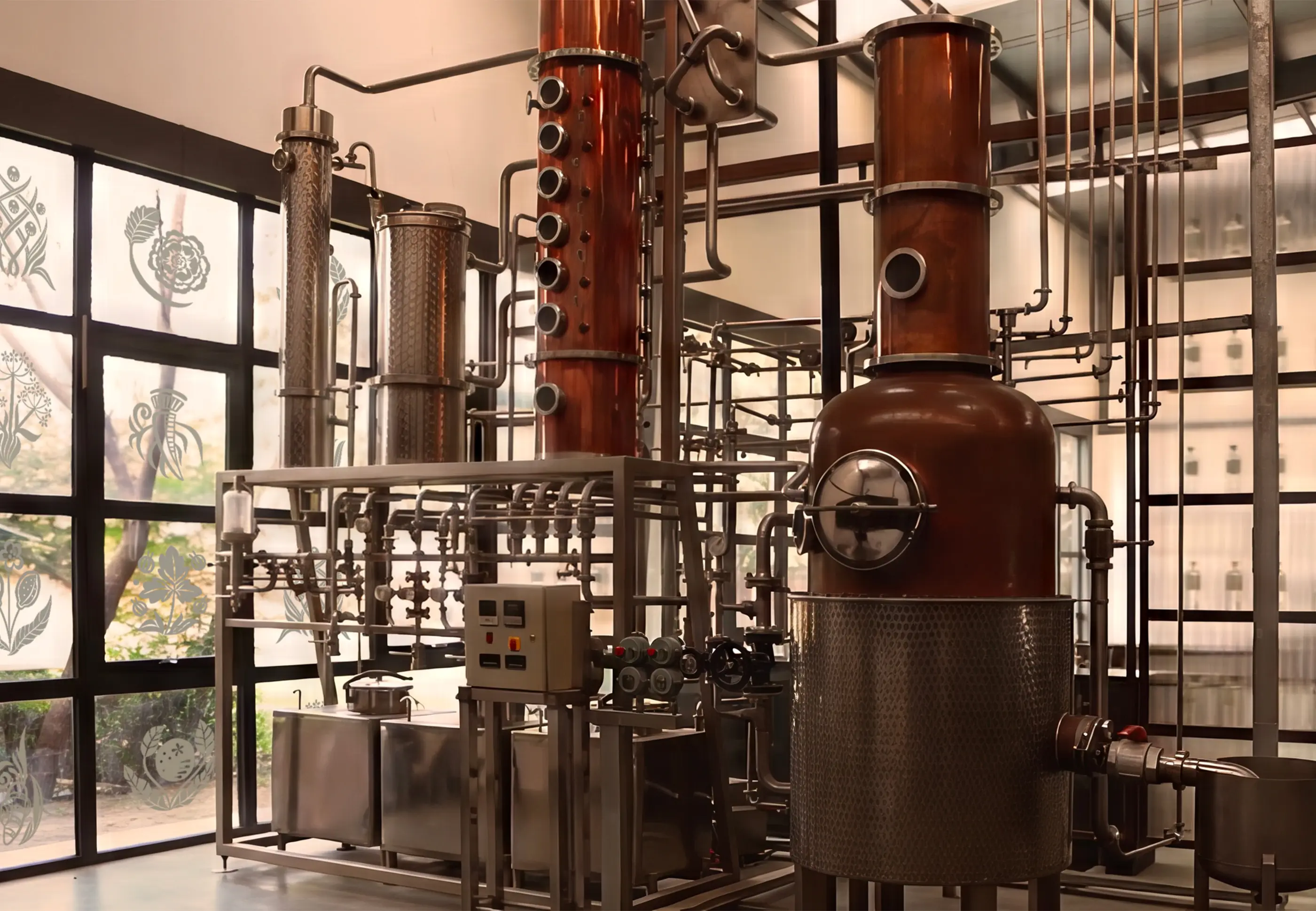
The Space: An independent, state-of-the-art facility adjoining the Swarup family's larger distillery in Behror, Rajasthan. Conceived as both a working distillery and a destination, the space hosts internal teams, industry professionals, and select guests for tastings and deeper engagement with the brand.
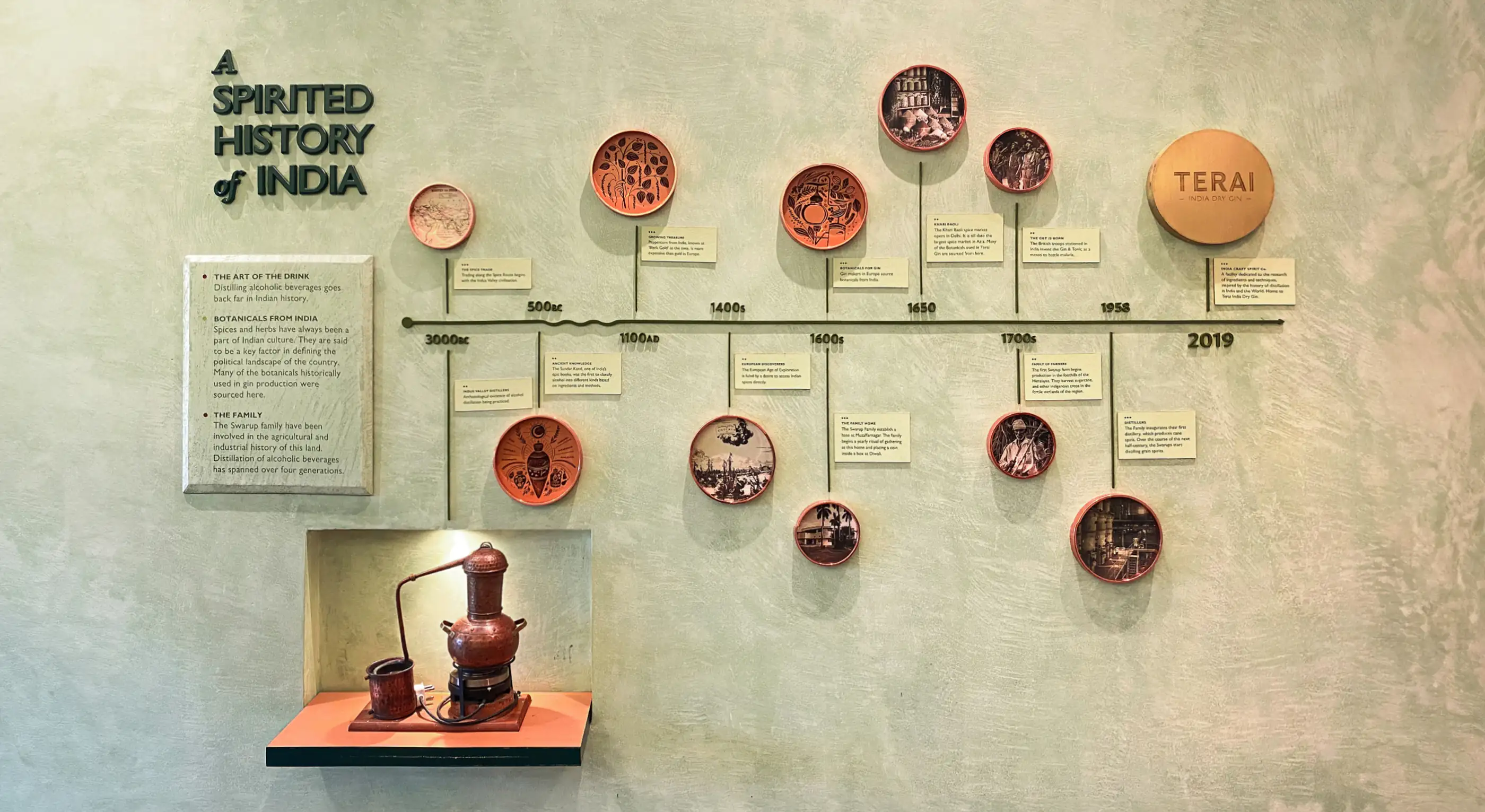
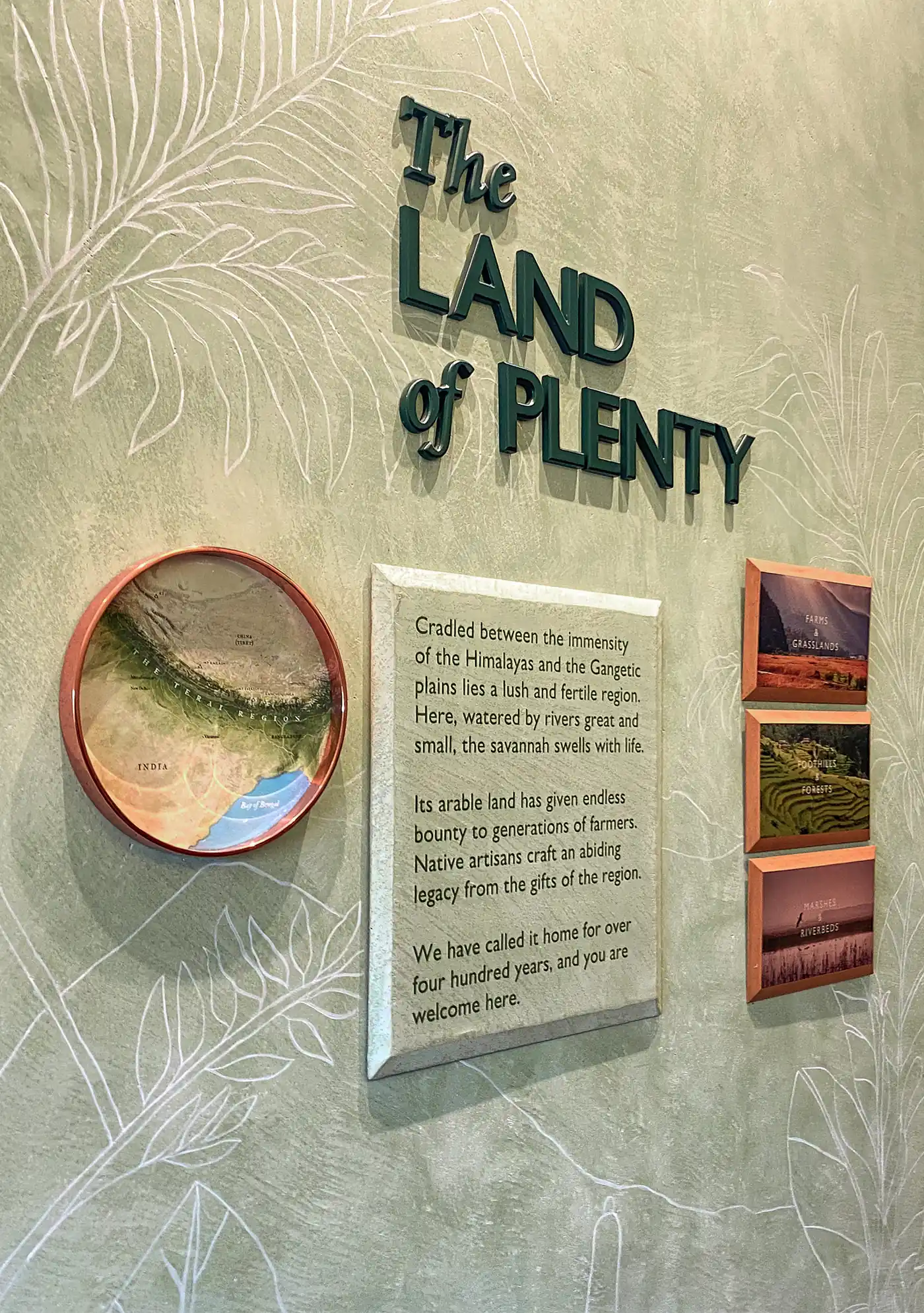
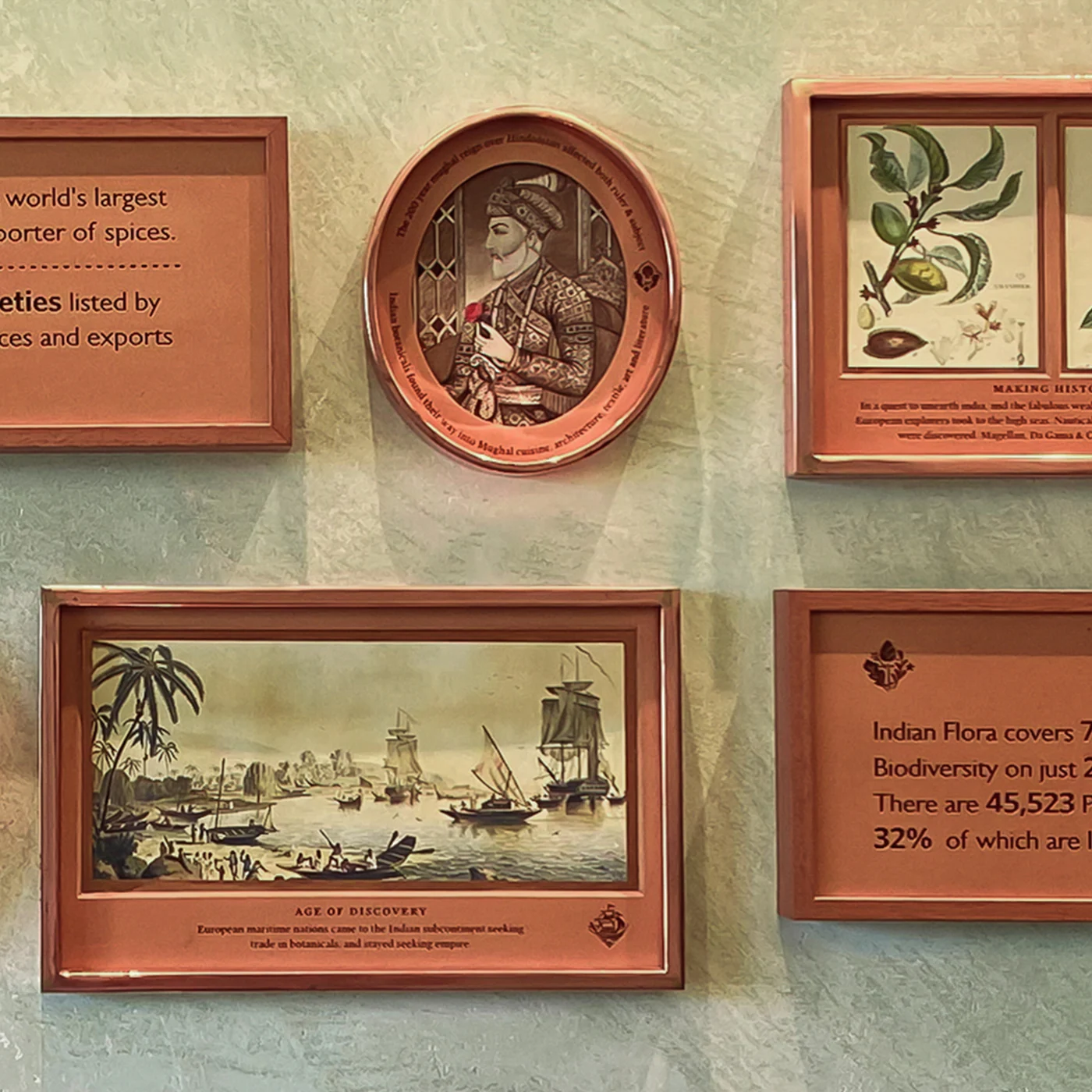
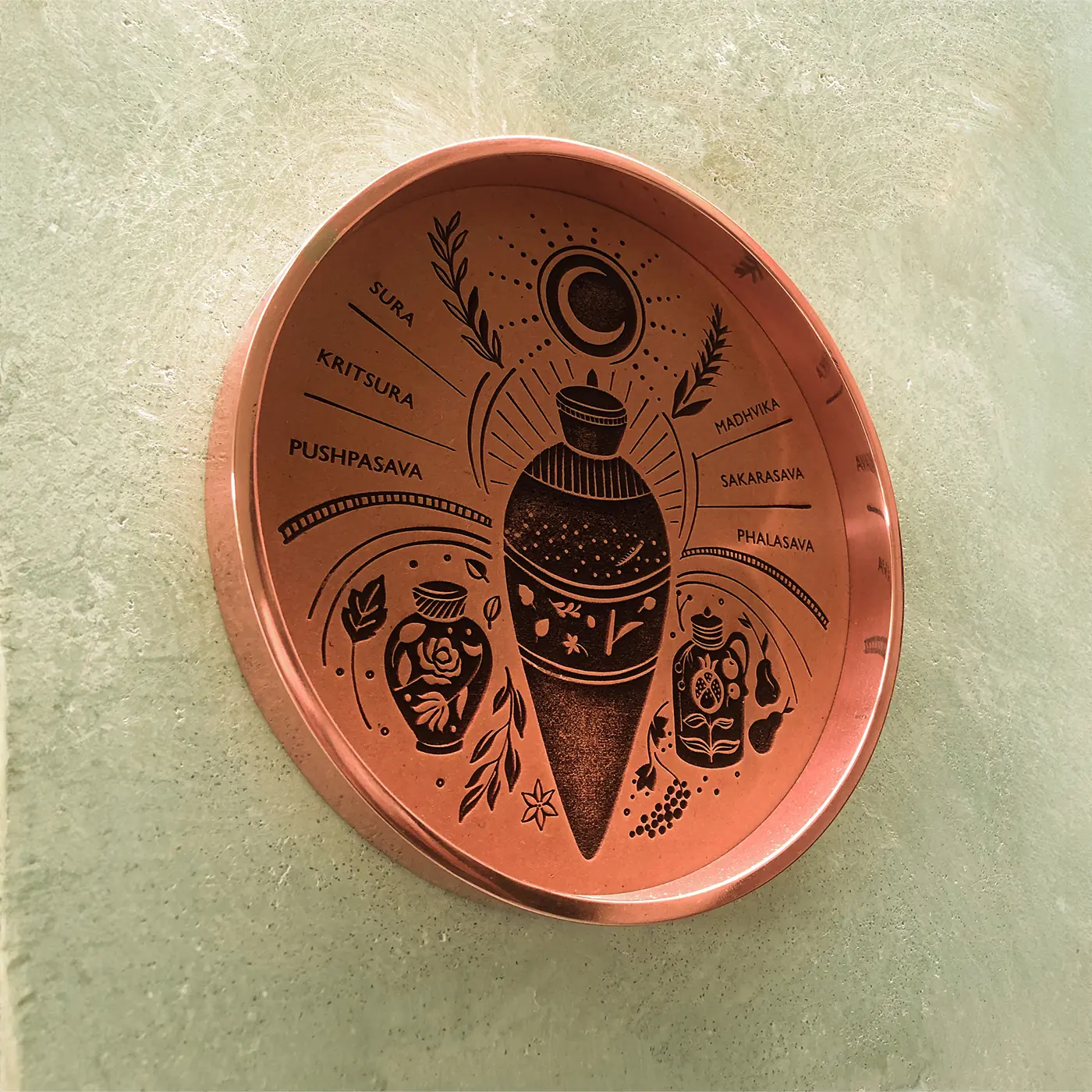
The Story: While designing Terai Gin's story and packaging, a rich narrative emerged—India's legacy as a source of rare spices and botanicals, its centuries-old history of alcohol production, and the Swarup family's lineage as landowners, agriculturalists, and distillers. These threads are woven into a clear spatial narrative, unfolding across a dedicated exhibition area and the main distilling hall.
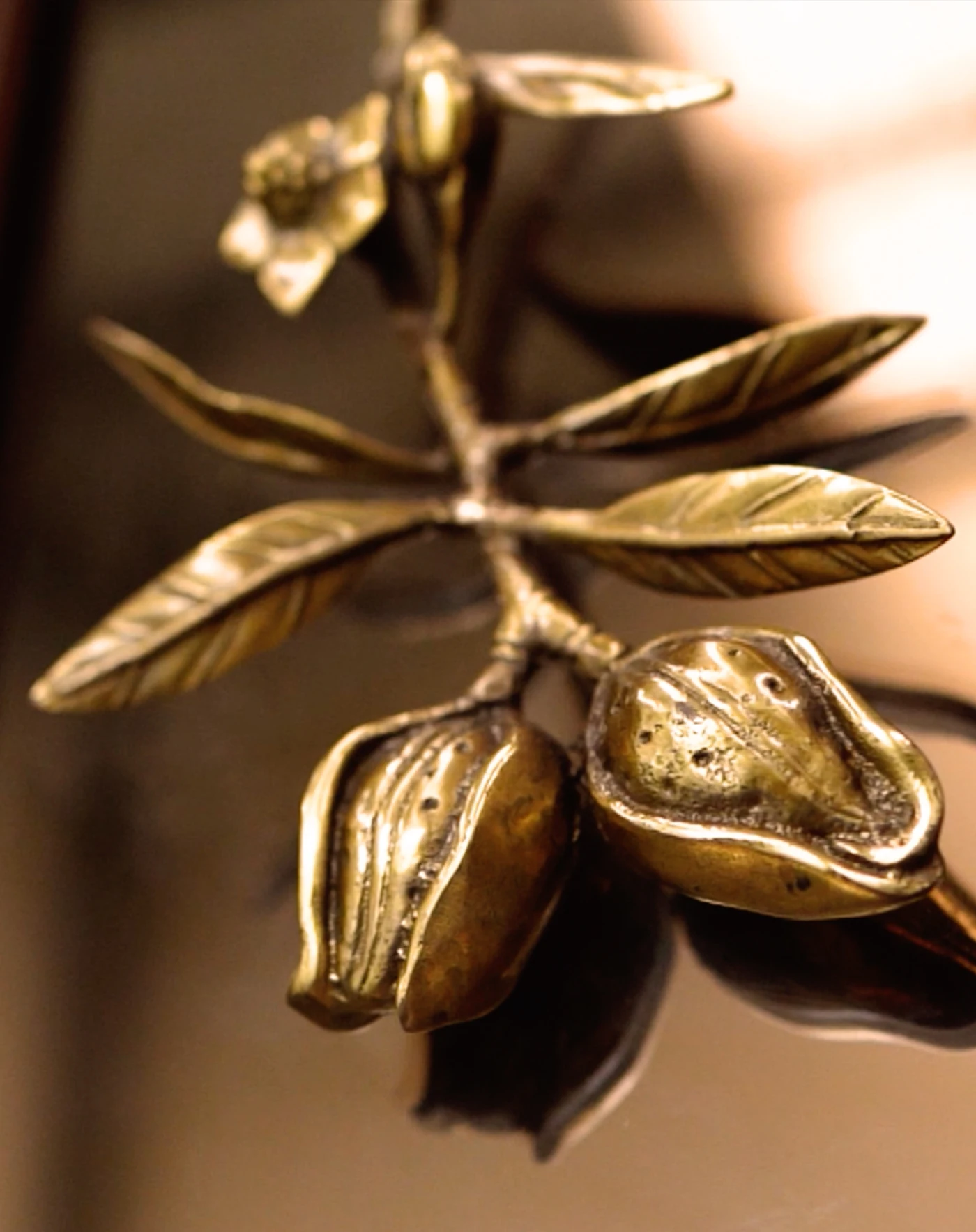
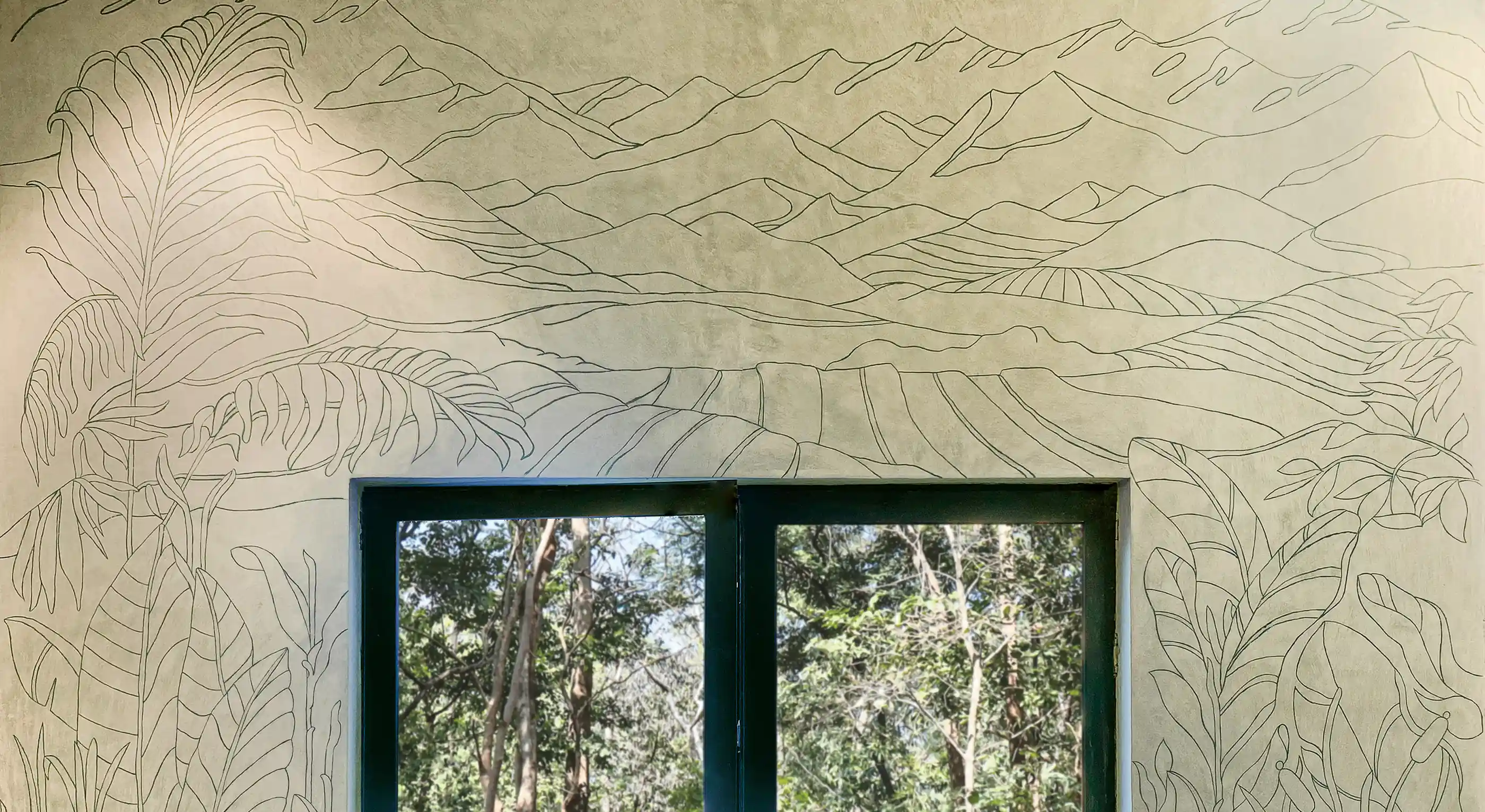
Handcrafted: The brand's ethos of craft shape the material language of the space. Expressed through a layered palette of hand-painted surfaces, brass artefacts, ceramic sculptures, embroidered tapestries, lacquered pieces, and woven furniture—the brand's story is brought to life in a tactile, artisanal environment.
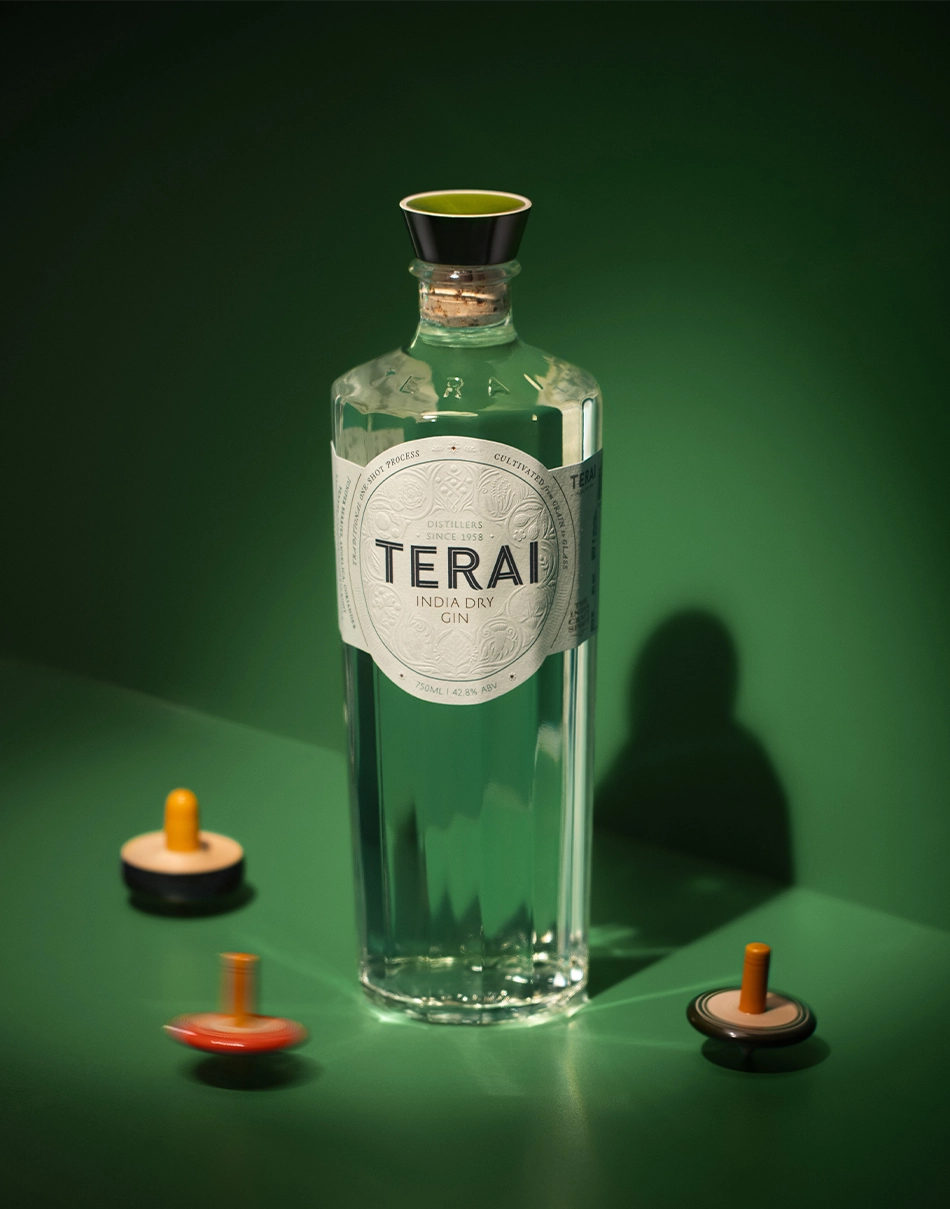
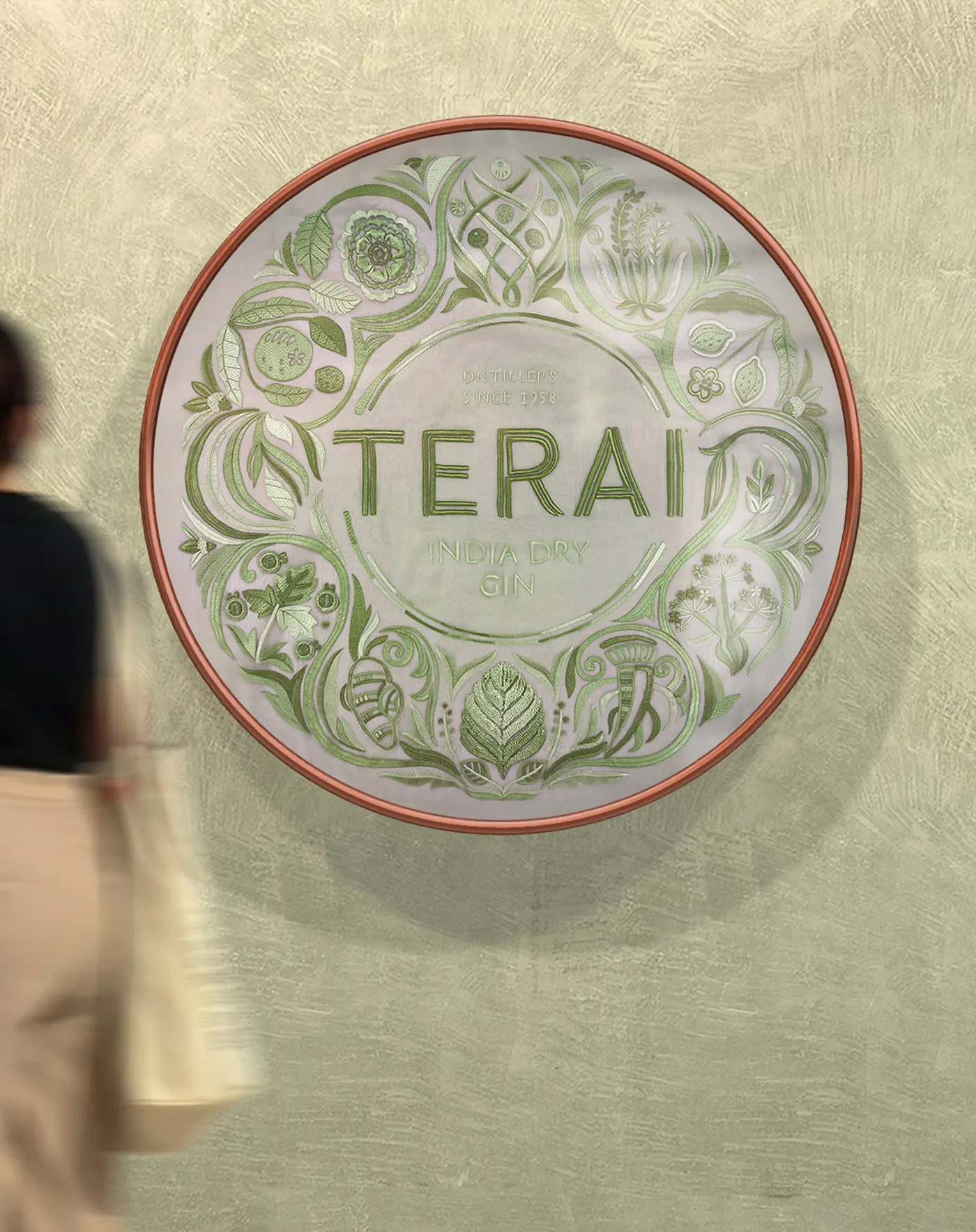
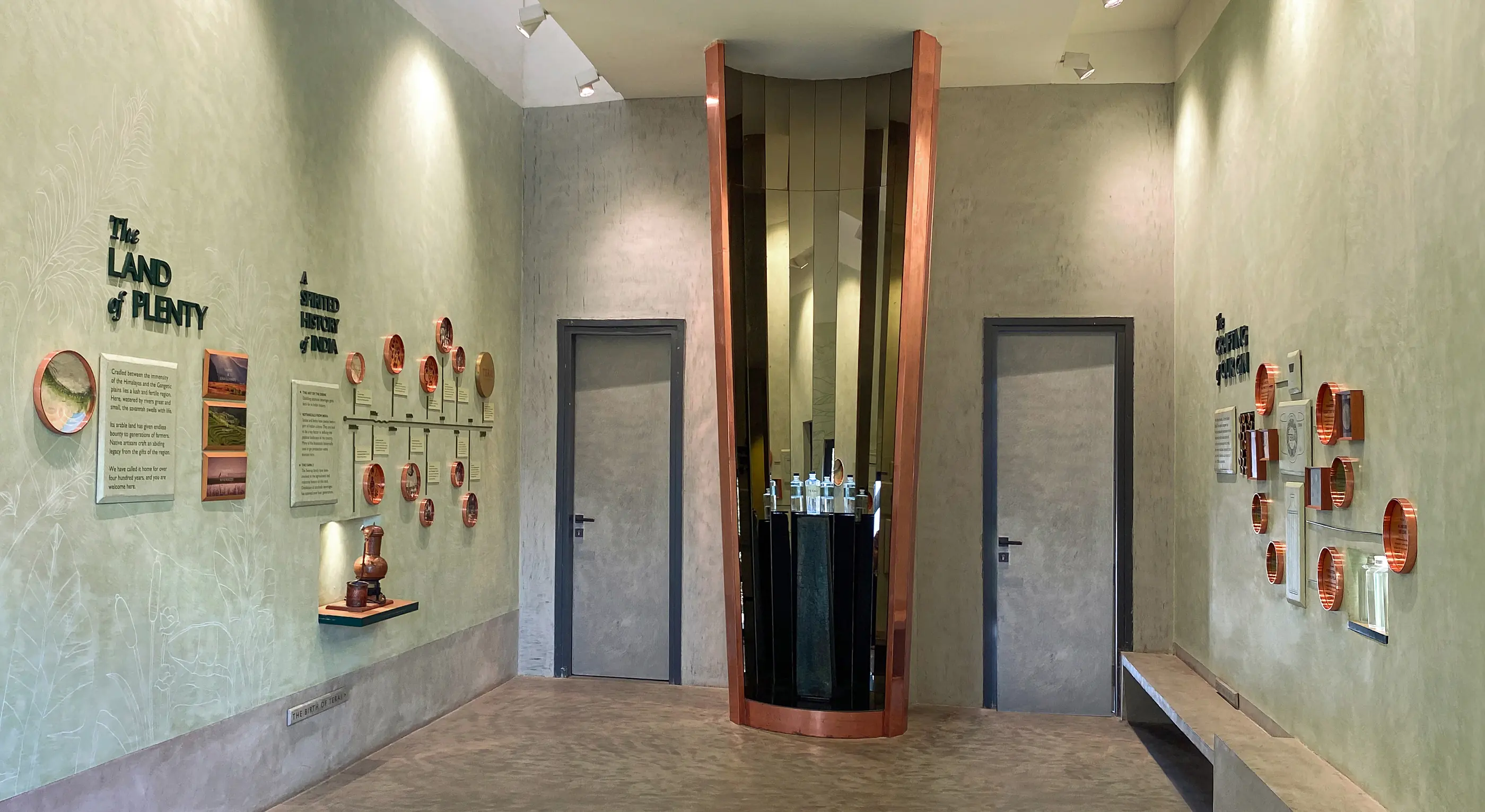
Designed as a cool green respite from the Rajasthan heat, the exhibition space is meant to feel like a refreshing sip of gin after the blazing sun outside. This immersive environment becomes the stage on which Terai tells its story—a proud showcase not only of the brand and the Swarup family legacy, but also a quiet remembering of India's often forgotten past. Through stories of botanicals, indigenous spirits, and agricultural traditions, the exhibition articulates Terai's philosophy and firmly places the brand on the global gin map.
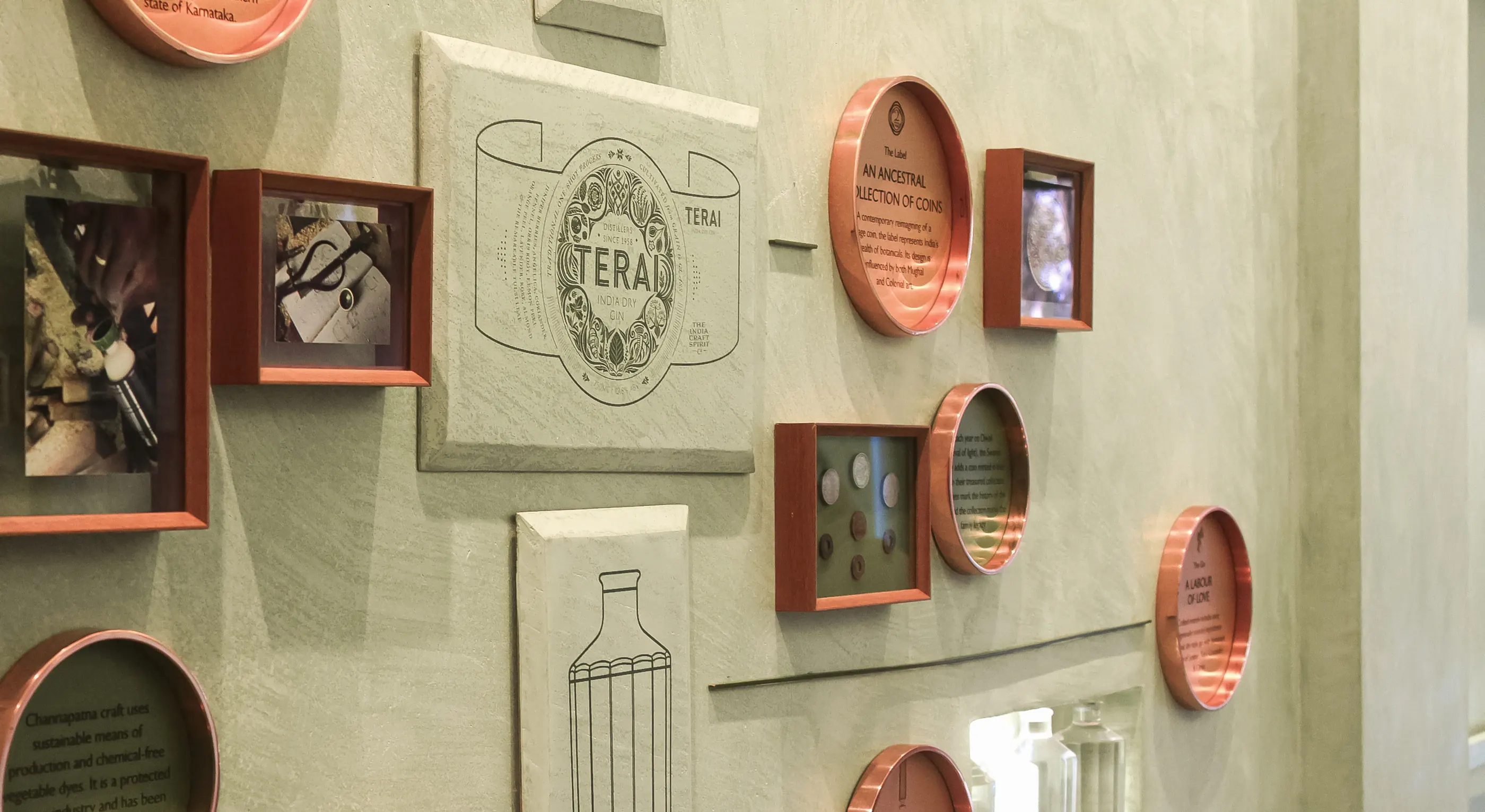
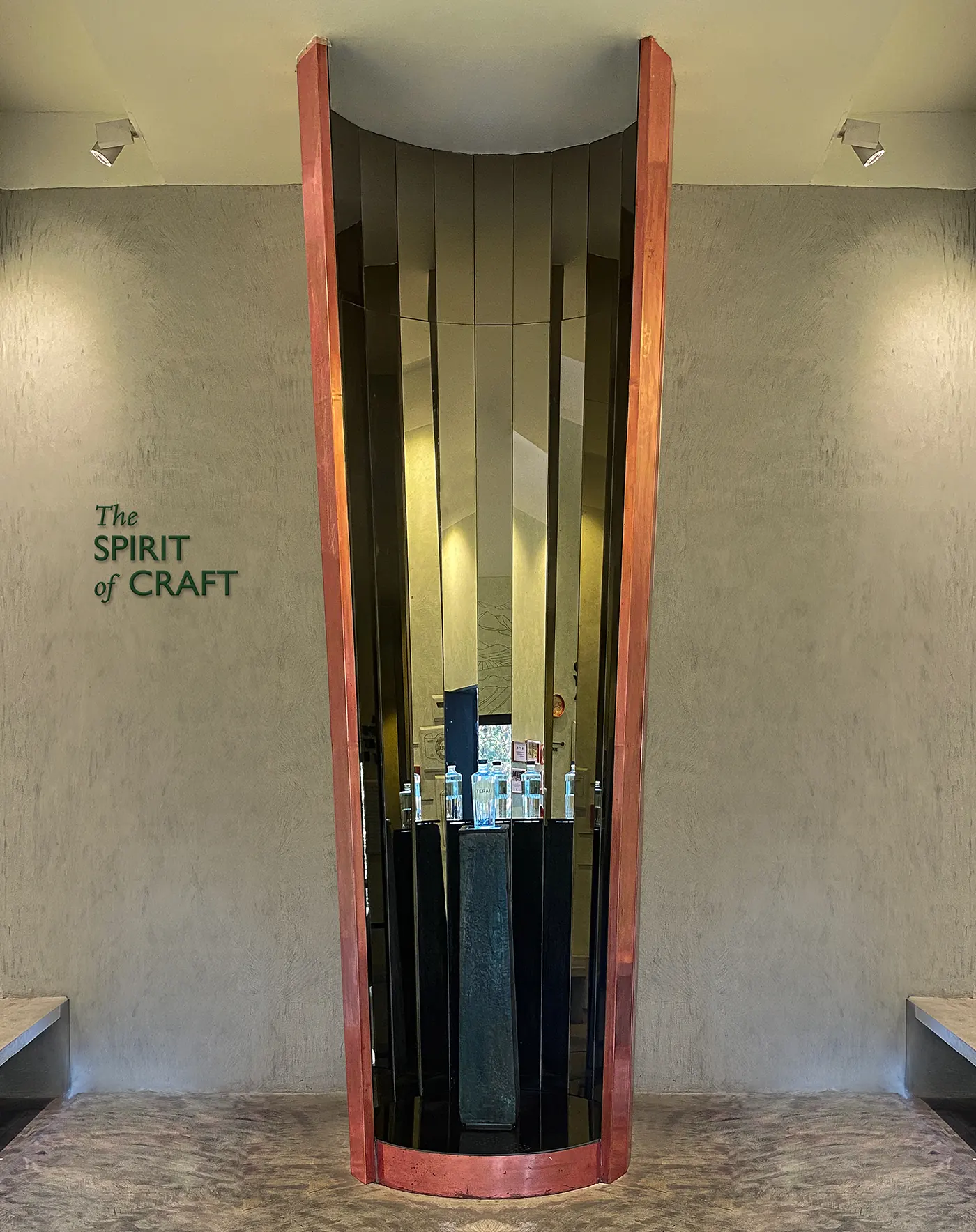
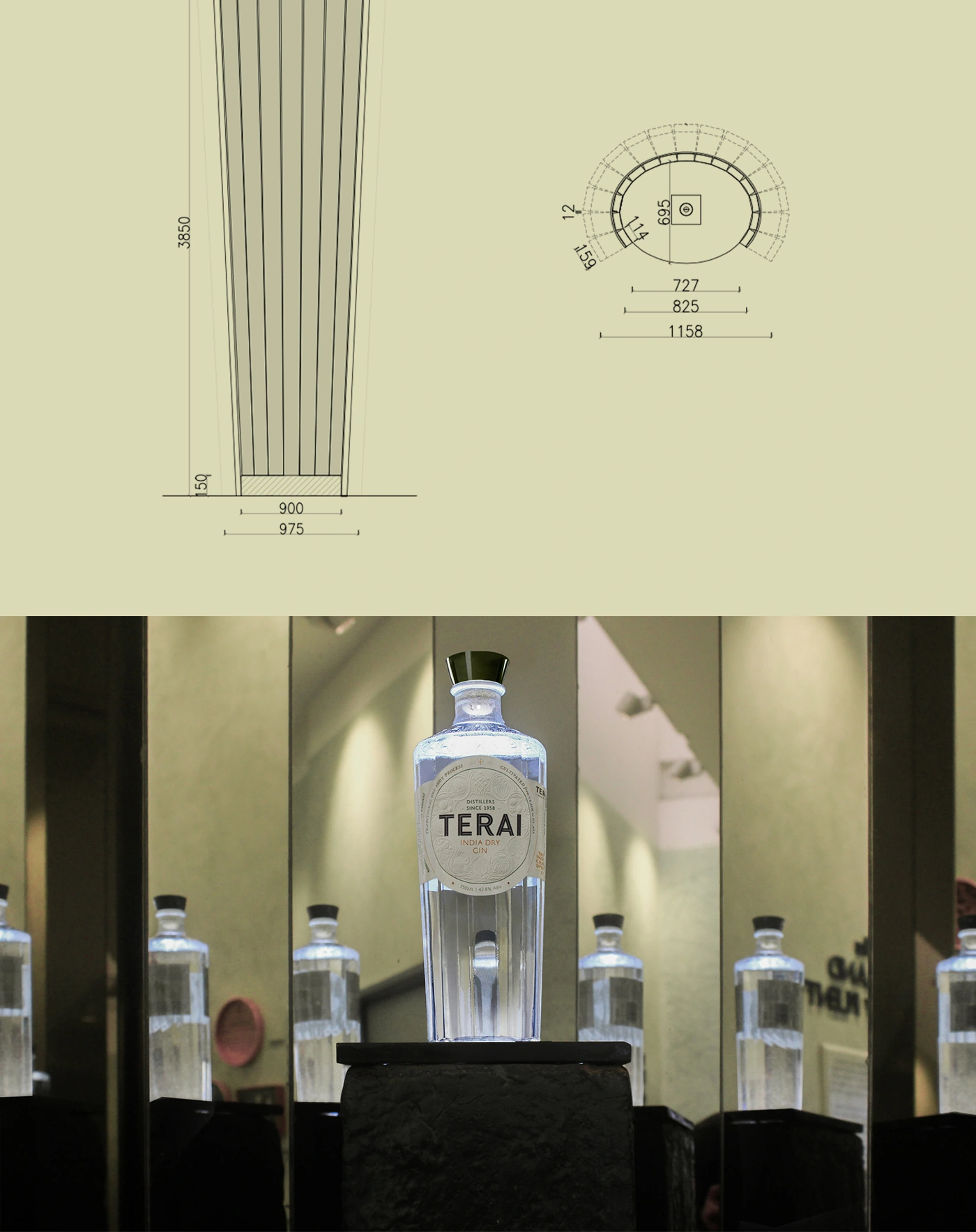
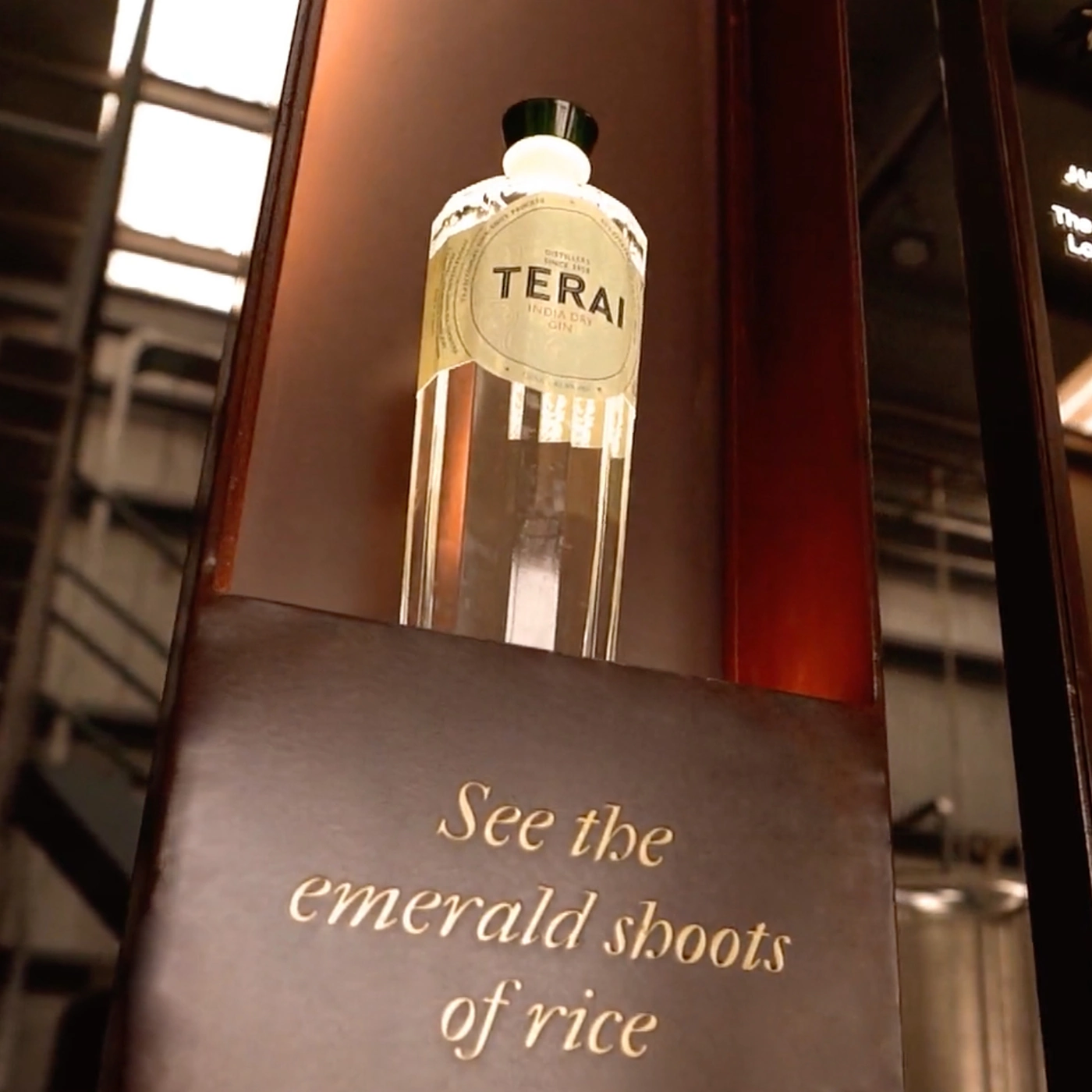
The large hall is designed to serve a dual role—housing the industrial processes of production and bottling, while also functioning as a space for guided tastings. A large screen acts as a visual threshold between these worlds. Terai Gin's eleven botanicals are glorified as brass artefacts, displayed alongside the gin bottles that are elevated to sculptural objects in their own right. An evocative poem sets the tone. Handwoven chairs gather around a central tasting table where the Channapatna craft returns in the form of place settings and coasters. All the elements come together to ground the experience in material and tradition.